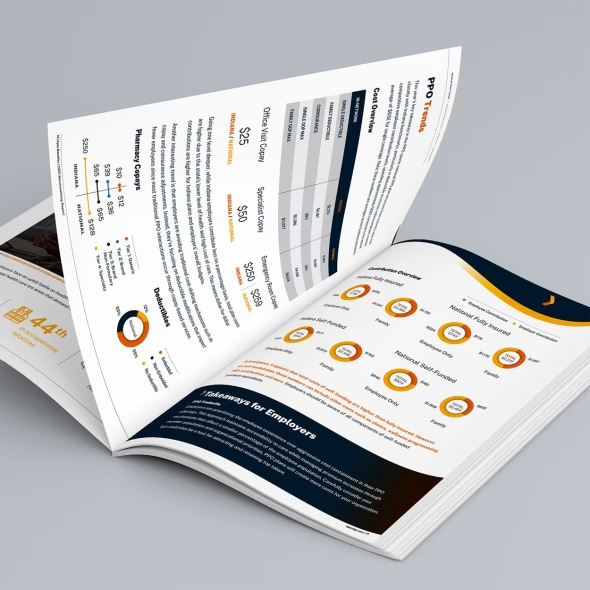
What is Employee Benefits Benchmarking?

Employee benefits benchmarking is the practice of comparing your organization’s benefits offerings, such as health insurance, paid leave, wellness programs, retirement plans and more, with those provided by similar employers in your industry, region or peer group. This comparison enables HR leaders to assess the competitiveness, design and cost-effectiveness of their own benefits packages, ensuring they attract and retain top talent. By utilizing benchmarking data, organizations can pinpoint gaps, refine plan designs, enhance cost management and ensure their benefits remain aligned with employee needs.

See Where You Rank

Get Your Custom Benefits Benchmarking Report

See how your organization compares to your Indiana peers

Why is Employee Benefits Benchmarking Important?

Many employers believe they have no control over the rising costs of benefits and healthcare. But there are many things they absolutely can control. Employee benefits benchmarking empowers organizations to take control of benefits costs and stay competitive. Here are key reasons why it matters:

  • Attract and Retain Talent: A competitive benefits package is essential for attracting and keeping top talent. Benchmarking ensures your offerings are in line with or exceed industry standards, helping you position your organization as an employer of choice.
  • Cost Management: Benchmarking provides insights into what similar organizations are spending on benefits. This data helps you manage and potentially lower costs by aligning expenditures with industry norms while optimizing the value of your offerings.
  • Strategic Planning: Aligning your benefits strategy with organizational goals is critical. Benchmarking informs strategic decisions about plan design, allowing you to tailor benefits to meet both employee needs and budget constraints.
  • Performance Evaluation: Regularly evaluating your benefits program through benchmarking helps you determine if your offerings are effective and competitive. Use insights from the 2025 Apex Benefits Employee Benefits Benchmark Report to ensure your strategy leads the industry.

The 2025 Apex Benefits Indiana Employee Benefits Benchmark Report offers the most extensive dataset on the market, providing crucial insights to help you take control of your benefits strategy.

Download the 2-page Executive Summary to learn more

How Apex Turns Health Care Benchmarking Into a Game Plan

Health care benchmarking data only creates value whensomeone turns it into decisions. 

Apex’s benefits strategists and clinicians review your results against your workforce, then build a plan around what the numbers actually demonstrate. 

This might mean renegotiating a vendor contract, shifting plan tiers or bringing in pharmacy benefits consulting to target rising prescription costs. Our population health management team adds clinical insight to the data, catching health trends before they inflate next year’s spend. 

With us, your plan stays specific to your organization instead of copying a generic industry average.

From Data Points to a Stronger Benefits Strategy

A single benchmarking report is a snapshot. The real payoff comes from checking it every year and using each round to sharpen your next move. 

Apex builds your benefits benchmarking results into an ongoing employee benefits strategy that adjusts as your workforce and market shift.

That strategic work often touches:

Self-Funded or Fully Insured, the Comparison Still Matters

The funding model your organization uses changes what your benefits benchmarking data can actually tell you. Self-funded employers pay real claims costs, which means more visibility but also more exposure to a single bad claims year, often paired with stop-loss insurance to cap that risk. 

Fully insured employers pay a fixed premium and hand that exposure to the carrier, trading visibility for predictability.

Self-Funded:

  • Pays actual claims costs
  • Full visibility into claims data
  • Greater exposure to high-cost claims
  • Larger savings potential when managed well

Fully Insured:

  • Pays a fixed monthly premium
  • Predictable, stable budgeting
  • Limited visibility into underlying claims
  • Risk transferred to the carrier
Benefits strategy team discussing plan costs and printed data around a laptop in an office

Put Your Plan to the Test

Get Your Copy of the 2025 Report

Frequently Asked Questions: Employee Benefits Benchmarking

What data goes into a benefits benchmarking report?

A benchmarking report pulls together plan premiums, employee contributions, deductibles, plan design details and utilization rates from a peer group matched to your industry and workforce size. Apex layers in claims trends and vendor contract terms for a fuller picture.

How often should employers benchmark their benefits?

Most organizations benefit from an annual review, timed ahead of renewal season so results can actually influence plan decisions. Employers going through major workforce or funding changes often check more frequently.

What’s the difference between cost benchmarking and plan design benchmarking?

Cost benchmarking compares what you spend against similar employers, while plan design benchmarking compares the structure of your coverage, like deductibles and plan tiers. Both feed into the same overall analysis.

How much does employee benefits benchmarking cost?

Apex offers a no-cost, no-obligation benchmarking report as a starting point. Pricing for deeper custom analysis depends on workforce size and the scope of data involved.

More Insights